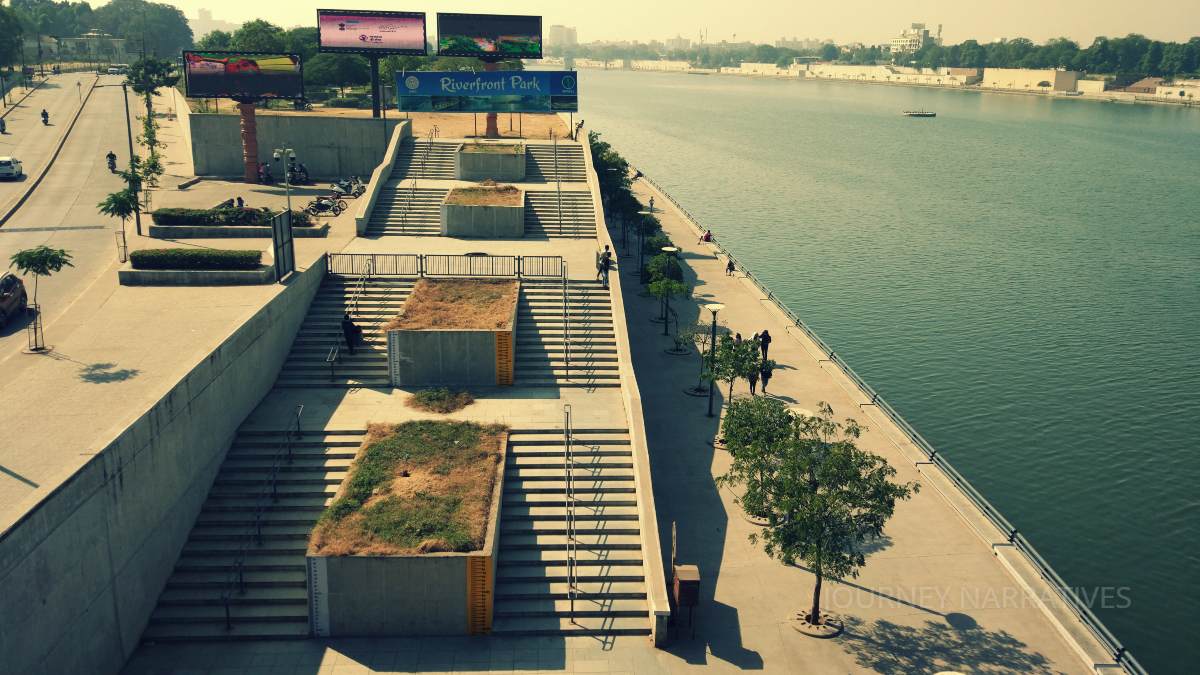
Sabarmati Riverfront is not just a promenade — it is Ahmedabad reimagined.
Stretching gracefully along the banks of the Sabarmati River, this urban development project has transformed what was once an uneven, seasonal river edge into one of Gujarat’s most dynamic public spaces. Locals come here to walk, cycle, celebrate, reflect, and simply pause.
It’s where heritage city energy meets contemporary design.
Urban spaces like the Sabarmati Riverfront reflect how cities across India are evolving to include more accessible public environments.
Table of Contents
1. A Morning Walk That Feels Surprisingly European
At sunrise, Sabarmati Riverfront feels calm and cinematic.
Joggers trace the wide pathways. Cyclists glide past. The sky slowly shifts from pale blue to gold over the river. There’s a sense of structure and openness that feels almost European in design — clean lines, landscaped gardens, uninterrupted views.
For travelers, it’s the perfect way to begin a day in Ahmedabad.
2. The Sabarmati River Gets a Second Life
The Sabarmati River was once largely seasonal, with uneven water flow.
Today, the riverfront project has created a more consistent and visually appealing waterfront stretch. The transformation represents modern urban planning at scale — turning neglected land into usable public space.
It’s not just beautification; it’s city regeneration.
3. Evenings at Sabarmati Riverfront Feel Electric
If mornings are peaceful, evenings are alive.
As the sun sets, Sabarmati Riverfront becomes:
- A gathering space for families
- A casual date spot
- A photography hotspot
- A cultural event venue
The breeze off the water cools the air, and the city lights begin to shimmer. The atmosphere shifts from quiet to vibrant — without feeling chaotic.
4. Close to Gandhi’s Historic Ashram
Just along the river lies Sabarmati Ashram, the former residence of Mahatma Gandhi.
Visiting both in one day creates a compelling contrast — the quiet, historical weight of the ashram and the modern civic energy of the riverfront.
Together, they reflect Ahmedabad’s journey from freedom struggle to forward-looking urban identity.
5. A Space Designed for Everyone
One of the strongest aspects of Sabarmati Riverfront is accessibility.
The promenades are wide and well-maintained. Seating areas are thoughtfully placed. Cycling tracks encourage active use.
Unlike many urban landmarks that cater only to tourists, this one belongs to the locals first — and that authenticity enhances the experience for visitors.
6. Boat Rides Add a Different Perspective
Boat rides along the river offer a refreshing view of the city skyline.
From the water, the symmetry of the embankments becomes more evident. It’s a gentle, short activity — but one that changes your visual relationship with the space.
For families and first-time visitors, it adds variety to the visit.
7. A Cultural and Event Hub
Throughout the year, Sabarmati Riverfront hosts festivals, marathons, exhibitions, and public gatherings.
The open spaces transform easily — from quiet walking zones to large-scale celebration grounds. This flexibility has made it one of Ahmedabad’s most active urban venues.
It’s not static. It evolves with the city.
8. It Represents a New-Age Gujarat
While iconic landmarks like the Statue of Unity represent scale and symbolism, Sabarmati Riverfront represents civic vision.
It shows how public infrastructure can redefine how people interact with their city.
For travelers exploring Gujarat beyond monuments and temples, this riverfront offers insight into the state’s modern aspirations.

Travel Tips for Visiting Sabarmati Riverfront
- Best Time to Visit: October to February
- Best Time of Day: Early morning or after sunset
- Time Required: 1–2 hours
- Activities: Walking, cycling, boating, photography
- Nearest Landmark: Sabarmati Ashram
Carry water in summer months, as afternoons can be hot.
Riverfront developments like the Sabarmati Riverfront reflect a broader shift in how cities across Asia are redefining public spaces.
Is Sabarmati Riverfront Worth Visiting?
Yes — especially if you enjoy urban spaces that feel alive and intentional.
Sabarmati Riverfront is not about ancient carvings or towering statues. It’s about atmosphere, movement, and community.
It reveals a side of Gujarat that is progressive, inclusive, and thoughtfully designed.
And sometimes, understanding a destination means walking where its people walk.
For more heritage landmarks, architectural marvels, and cultural experiences across the state, explore our complete Gujarat travel guide.