
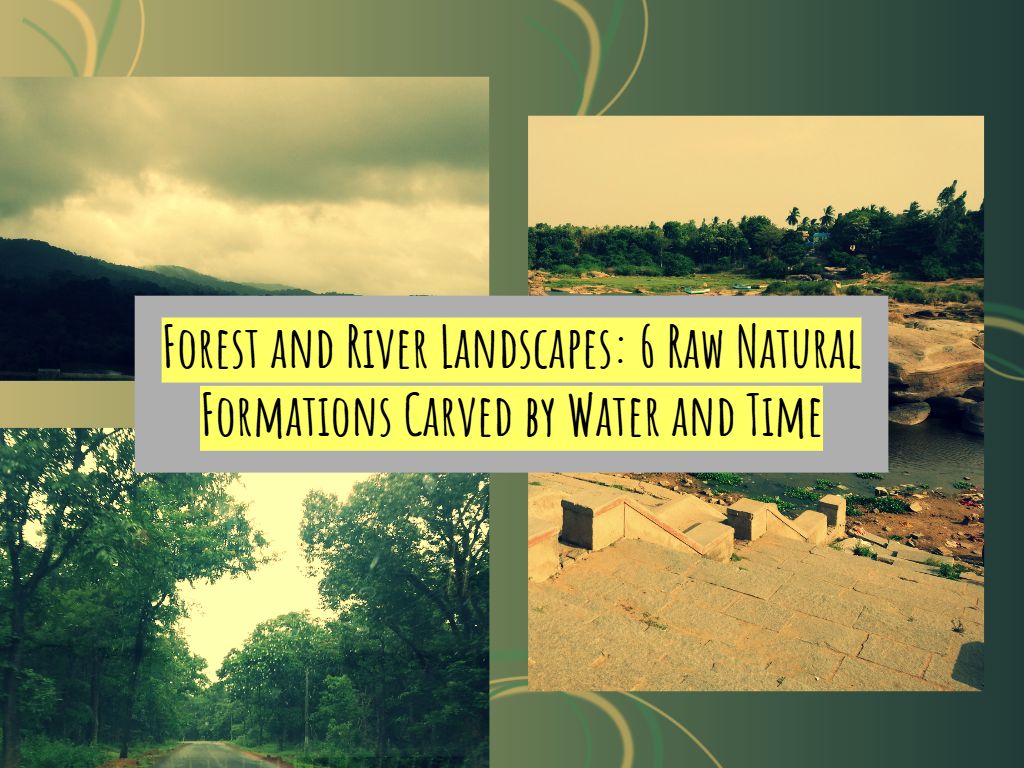
There is a quiet authority in forest and river landscapes — a sense that nature does not rush, yet always arrives where it intends to. Long before roads were drawn or settlements named, water began its work here, shaping stone, feeding forests, and carving pathways through the land with steady patience. These landscapes are not dramatic because they try to be; they are powerful because they endure.
Forests grow where rivers breathe life into the soil. Rivers flow where the land allows them passage. Together, they create ecosystems that feel ancient, balanced, and deeply alive. Traveling through such places is less about sightseeing and more about witnessing nature’s long conversation with time.
This journey explores six raw natural formations shaped by forests and rivers, each revealing how water — through force, flow, and persistence — defines landscapes that continue to sustain life, memory, and movement.
Table of Contents
1. Thunderous Waterfalls: When Rivers Fall With Force
Some landscapes announce themselves before they are seen. The distant roar of falling water, the vibration in the ground, and the cool mist in the air signal a place where gravity and volume meet in full expression.
Waterfalls represent one of the most visible displays of nature’s raw power. Rivers that travel calmly across plateaus suddenly plunge into deep gorges, reshaping rock faces with relentless impact. Over centuries, these falls widen cliffs, deepen valleys, and alter entire ecosystems downstream.
Standing near a thunderous waterfall is humbling. It reminds us that rivers are not merely gentle carriers of water — they are sculptors capable of dramatic transformation.
To witness a waterfall where scale, sound, and force dominate the experience, Dudhsagar Waterfalls: 5 Thunderous Cascades That Showcase Nature’s Raw Power reveals how falling water commands both landscape and attention.
2. Tiered Waterfalls and River Drops: Flow Shaped by Structure
Not all waterfalls descend in a single dramatic plunge. Some unfold in stages — stepping down rock layers shaped by geological variations. These tiered drops reveal how rivers adapt to resistance, finding multiple pathways rather than forcing one.
Each level creates its own micro-landscape: pools that reflect the sky, moss-covered ledges, and calmer stretches where water regathers before continuing its descent. These formations highlight the relationship between water speed, rock strength, and elevation.
Tiered river drops often feel rhythmic rather than overwhelming. They invite observation — how water splits, reunites, and reshapes itself as it moves forward.
For a closer look at cascading river drops that reveal the mechanics of flowing water, Jog Falls: 6 Spectacular Drops That Reveal the Force of Flowing Water explores how structure influences movement.
3. Underground Rivers and Rock Chambers: Landscapes Hidden Below the Surface
Some of the most remarkable river-shaped landscapes exist out of sight. Over thousands of years, flowing water dissolves limestone, widens cracks, and creates underground chambers where rivers continue their quiet work beneath the earth.
Cave systems formed by subterranean rivers feel timeless. Stalactites and stalagmites grow slowly, drip by drip, while hidden streams continue to carve passages through darkness. These spaces remind us that forest and river landscapes evolve even when unseen.
Traveling through river-carved caves offers a rare perspective — one where sound replaces sight, and the presence of water becomes the primary guide.
To explore ancient rock chambers shaped slowly by underground rivers, Borra Caves: 5 Ancient Rock Chambers Shaped Slowly by Underground Rivers reveals a hidden side of river landscapes.

4. Life-Giving River Stretches: Where Water Sustains Forests
As rivers move beyond dramatic drops and underground paths, they often settle into long, steady stretches that nourish everything around them. These sections may appear calm, but their impact is profound.
Riverbanks become fertile corridors where forests thrive, wildlife gathers, and human civilizations emerge. Seasonal flooding replenishes soil, while consistent flow regulates temperature and humidity, creating stable ecosystems.
These life-giving river stretches demonstrate water’s quieter role — not as a force of erosion, but as a source of continuity.
To understand how a river quietly sustains forests and human life along its path, Cauvery River: 7 Timeless River Stretches That Nurture Forested Lands traces the enduring relationship between water and land.
5. Meandering Rivers and Living Landscapes: Flow That Shapes Life
Some rivers do not cut straight paths. Instead, they bend, curve, and wander — responding to terrain, sediment, and time. These meandering rivers shape floodplains, wetlands, and forests that depend on their seasonal rhythms.
As rivers shift course, they leave behind rich soil, oxbow lakes, and diverse habitats. These landscapes feel alive because they are constantly changing, yet deeply balanced.
Traveling alongside such rivers offers insight into nature’s flexibility — how adaptation, not resistance, creates abundance.
For a journey along a river where bends define both land and life, Tungabhadra River: 6 Powerful River Bends That Shape the Land and Life Around explores movement as creation.
6. Forest Ecosystems Sustained by Rain and Rivers: Nature in Balance
At the intersection of rainfall, rivers, and dense forest cover lies one of nature’s most resilient systems. Here, water does not dominate — it integrates. Rain feeds streams, streams feed rivers, and rivers sustain forests that, in turn, regulate climate and flow.
Such forest ecosystems feel immersive. Canopies filter sunlight, forest floors absorb moisture, and life thrives in layers. These landscapes show how water’s greatest strength may lie not in force, but in consistency.
Walking through such forests feels grounding, as though nature is functioning exactly as intended.
To experience a wilderness shaped equally by rain and flowing rivers, Sathyamangalam Forest: 5 Untamed Wilderness Zones Sustained by Rivers and Rain reveals how balance defines survival.
Lingering Impressions from Forest and River Landscapes
Forest and river landscapes are reminders that nature’s most powerful work often happens slowly. Water shapes stone not through speed, but through persistence. Forest and river landscapes rise not through dominance, but through cooperation.
Long after leaving these places, the memory remains — the sound of flowing water, the damp earth underfoot, the sense of moving within systems far older than ourselves. These forest and river landscapes do not ask to be conquered or hurried. They invite us to observe, respect, and move at their pace.
And perhaps that is their greatest lesson: time, when paired with patience, can shape anything.
