There are waterfalls that charm, and then there are waterfalls that command silence. Dudhsagar belongs firmly to the latter. Rising deep within the forests of the Western Ghats, this colossal cascade doesn’t gently flow — it roars, crashes, and claims space. The name Dudhsagar, meaning Sea of Milk, feels poetic until you witness it in full force, when white torrents plunge down dark rock faces like unleashed energy.
More than just a scenic attraction, Dudhsagar Waterfalls stands as one of India’s most striking examples of how rivers sculpt landscapes over time, perfectly embodying the themes explored in our broader pillar story on forest and river landscapes shaped by water and time.
Table of Contents
Where the River Breaks Free: The Making of Dudhsagar
Dudhsagar is formed by the Mandovi River, which begins its journey in the Western Ghats of Karnataka before flowing westward into Goa. At this point in its course, the river encounters a steep drop in elevation — and gravity does the rest.
Instead of a single plunge, Dudhsagar unfolds as five distinct cascades, each tumbling over layered basalt rock. Over centuries, the river has carved, widened, and deepened these channels, transforming a simple descent into one of the tallest and most powerful waterfalls in India.
This is exactly the kind of raw river action that defines forest-and-river systems — where water doesn’t just pass through the land, but actively reshapes it.
The Five Cascades: A Symphony of Force and Flow
What sets Dudhsagar apart is not just its height, but its multi-tiered structure. Each cascade has its own character:
- The Upper Drop – Narrow and forceful, announcing the river’s intent.
- The Broad Middle Sheets – Where water fans out, creating the illusion of flowing milk.
- The Twin Streams – Split by rock formations shaped over time.
- The Railway-Level Rush – Where the iconic bridge cuts across the waterfall’s path.
- The Final Plunge – A thunderous descent into the forest basin below.
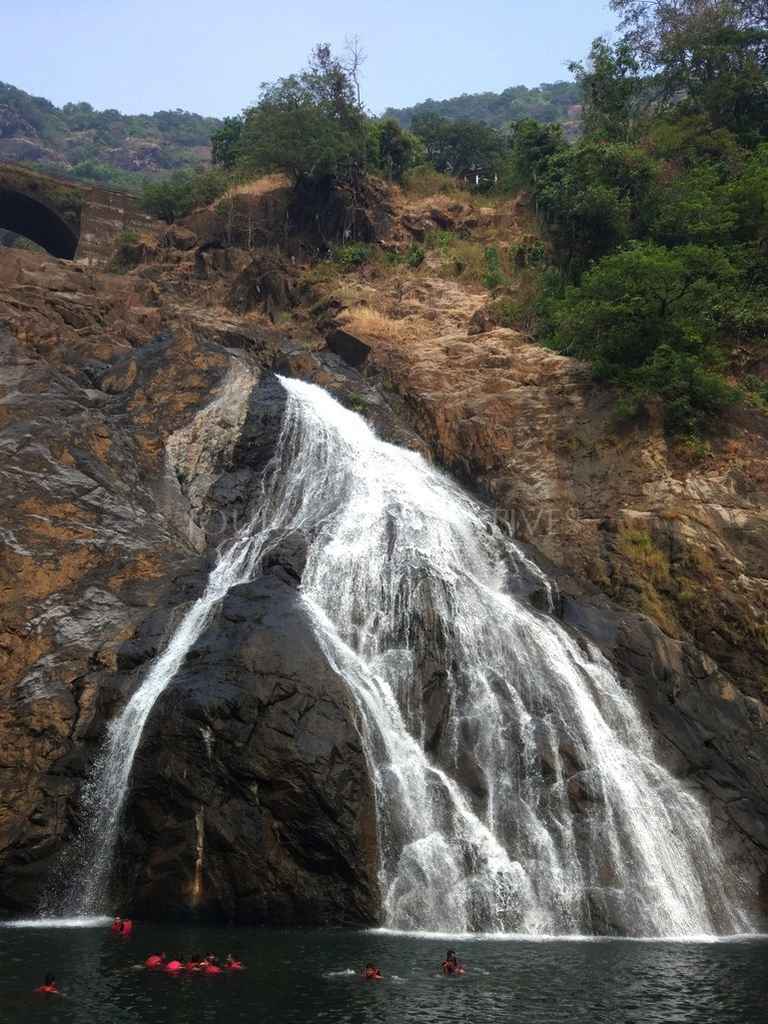
Together, these cascades create a continuous narrative of motion, reminding us that landscapes are not static — they are always becoming.
Dudhsagar is just one powerful expression of how rivers shape land over centuries, a theme explored more deeply in our broader story on Forest & River Landscapes carved by water and time.
Forests That Amplify the Experience
Dudhsagar does not exist in isolation. It is enveloped by dense Western Ghats forest, part of the Bhagwan Mahaveer Wildlife Sanctuary. This forest ecosystem plays a crucial role:
- It regulates water flow during monsoons
- Prevents excessive erosion
- Maintains biodiversity around the river system
The surrounding greenery intensifies the waterfall’s drama. Mist clings to tree canopies, sunlight filters through spray, and the constant echo of water fills the valley. In this setting, Dudhsagar feels less like a tourist site and more like a living system at work.
This interaction between river energy and forest stability is a recurring theme across many natural formations discussed in our pillar post on forest and river landscapes.
Monsoon: When Raw Power Takes Center Stage
While Dudhsagar flows year-round, the monsoon months (June to September) reveal its true temperament. Rain-fed volume transforms the cascades into a roaring wall of water, often visible from kilometers away.
During this season:
- The sound is thunderous
- Spray rises like fog
- The river’s carving power is on full display
It’s during monsoon that Dudhsagar best demonstrates how time, water, and gravity collaborate to shape monumental landforms — a perfect real-world illustration of river-driven geology.

The Iconic Railway Bridge: Human Scale vs Natural Scale
One of Dudhsagar’s most photographed features is the railway bridge that cuts across its midsection. Trains passing slowly across the bridge appear almost fragile against the massive waterfall beside them.
This contrast offers a quiet lesson:
Human structures are temporary interruptions, while natural forces operate on timelines far beyond us.
In the context of Journey Narratives, this moment fits beautifully — a reminder that travel isn’t just about places, but about perspective.
Dudhsagar Within the Larger Landscape Story
Dudhsagar Waterfalls is not just a standalone marvel. It belongs to a wider family of river-carved forest formations across India — waterfalls, gorges, river valleys, and plunge pools that owe their existence to persistent water flow.
In our main pillar post, “Forest & River Landscapes: 6 Raw Natural Formations Carved by Water and Time,” Dudhsagar represents the category where vertical force meets forest resilience. Linking these stories together allows readers to see patterns — not isolated sights, but connected natural processes.
Visiting Dudhsagar: A Journey, Not Just a Destination
Reaching Dudhsagar often involves:
- Forest safaris
- Trekking routes
- Controlled access through sanctuary zones
This layered journey adds meaning. The waterfall is not handed to you — it is earned, much like the landscapes it has shaped over centuries.
When viewed through this lens, Dudhsagar becomes more than a photo stop. It becomes a chapter in a much larger narrative of water, time, and terrain.
The Moment Power Becomes a Memory
Standing near Dudhsagar, it’s impossible not to feel small — but also connected. The waterfall is loud, relentless, and ancient, yet deeply calming in its consistency. It has been falling long before us and will continue long after.
As part of India’s forest and river landscapes, Dudhsagar reminds us that nature’s raw power isn’t chaotic — it’s purposeful, shaping the world drop by drop, year after year.
And that, at its core, is what Journey Narratives is all about: not just seeing places, but understanding the stories they’ve been telling all along.