Hidden deep within the Eastern Ghats of Andhra Pradesh, Borra Caves stand as one of India’s most fascinating examples of how water quietly shapes the earth over unimaginable spans of time. Far from being just a tourist attraction, these limestone caves are a geological archive — recording millions of years of underground river activity, mineral deposits, and natural erosion.
Formed by the persistent flow of water through soluble rock, Borra Caves reveal how rivers do not only carve valleys and forests above ground, but also create vast chambers beneath the surface. This editorial exploration looks at five defining rock chambers and formations that together narrate the slow, powerful relationship between water and stone.
Table of Contents
1. The Grand Entrance Chamber: Where the River First Spoke
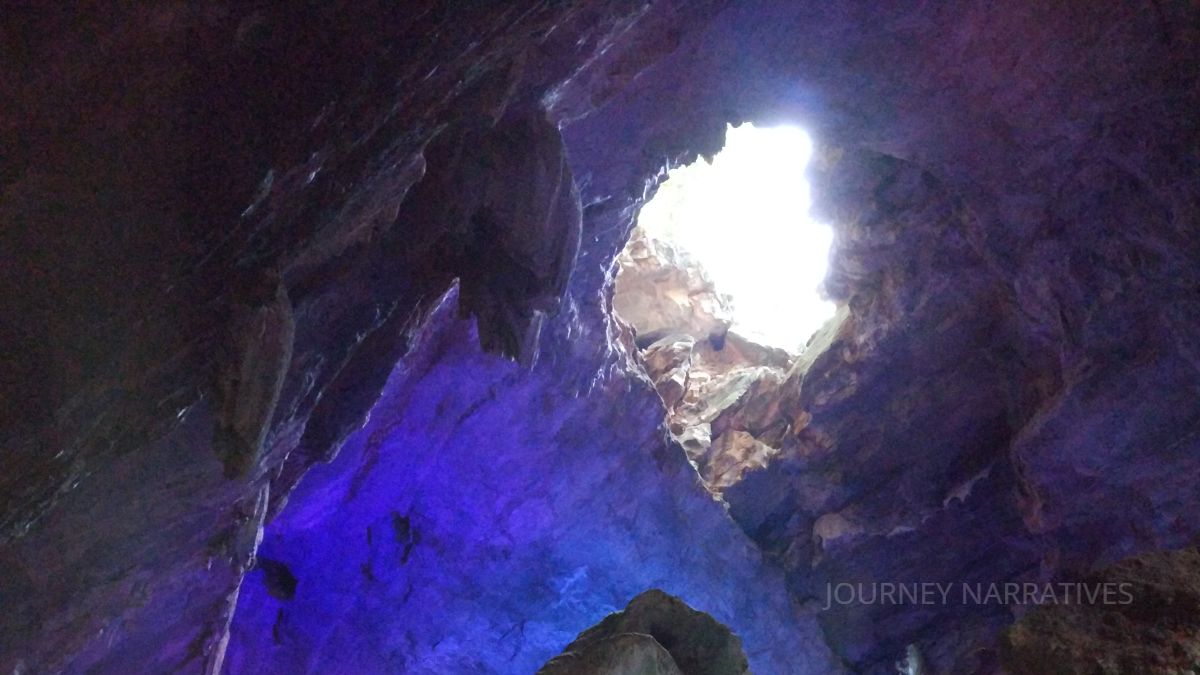
The moment water began seeping into cracks within limestone, Borra Caves began to take shape. The entrance chamber — wide, tall, and dramatic — represents the earliest stage of this process. Over time, underground streams dissolved calcium carbonate, gradually widening fissures into expansive hollows.
This chamber sets the tone for the entire cave system. Its scale demonstrates how steady water movement, rather than sudden force, creates some of nature’s most enduring structures. Dripping water continues to shape the ceiling and walls even today, reminding visitors that the caves are still evolving.
2. The Stalactite Hall: Stone Formed Drop by Drop
One of the most striking sections of Borra Caves is the hall filled with stalactites hanging from the ceiling like frozen waterfalls. These formations are the direct result of mineral-rich water dripping slowly over thousands of years.
Each drop leaves behind microscopic deposits of calcium carbonate. Over centuries, these deposits grow downward, creating elongated stone icicles. The stalactite hall illustrates how rivers don’t need speed to leave an impact — patience alone is enough to sculpt stone.
3. The Stalagmite Floor: Rising Forms from the Riverbed
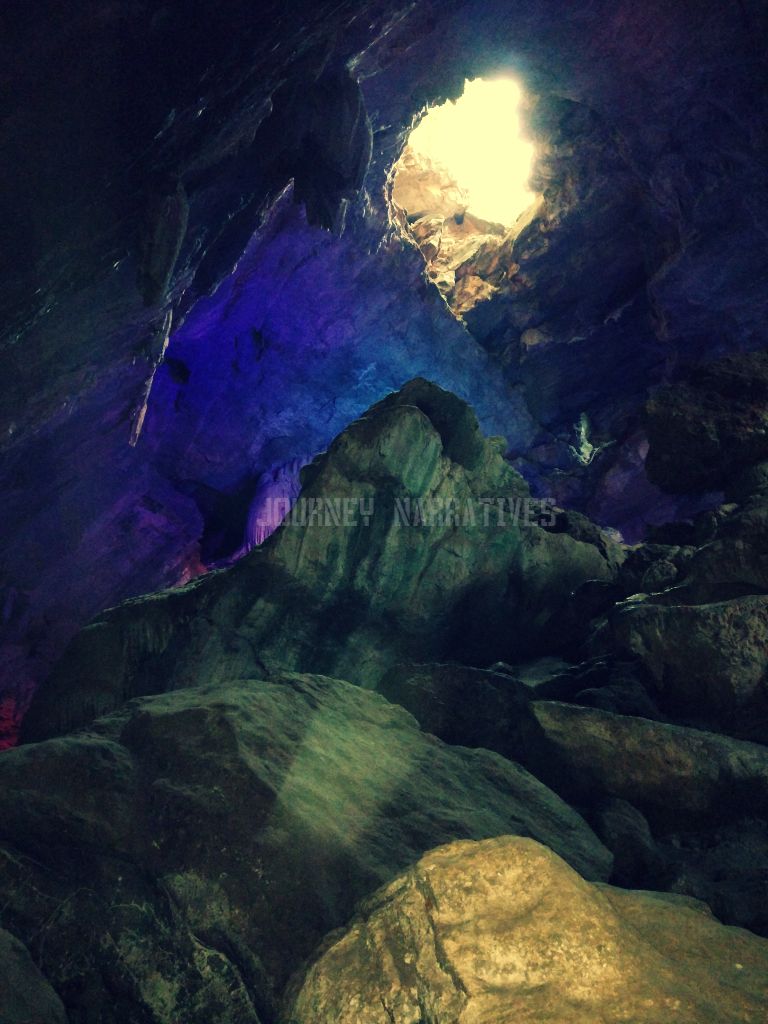
Directly beneath the stalactites, the cave floor tells a complementary story. Here, stalagmites rise upward as mineral-laden water splashes onto the ground and evaporates. Together, stalactites and stalagmites form pillars when they eventually meet — a rare but powerful symbol of geological time completing a cycle.
This chamber highlights the balance between erosion and deposition. While rivers carve rock away in some places, they simultaneously build it elsewhere, shaping caves as dynamic systems rather than static spaces.
4. The Cathedral Chamber: Nature’s Underground Architecture
Often compared to a natural cathedral, this vast chamber features towering rock columns and arched ceilings formed entirely by water-driven processes. Over millennia, underground rivers altered their flow paths, expanding some chambers while abandoning others.
The resulting space feels architectural, yet entirely organic. No two formations are symmetrical, reinforcing the idea that nature’s designs are shaped by variables like water chemistry, flow speed, and rock composition rather than fixed patterns.
5. The Deep Passages: Traces of Ancient Underground Rivers
Beyond the main chambers lie narrower passages and tunnels — remnants of ancient underground river routes. These corridors show where water once flowed more vigorously before geological shifts redirected its path.
Smooth rock surfaces, curved walls, and polished stone floors indicate long periods of continuous water movement. Though many of these passages no longer carry active streams, they preserve the memory of rivers that once powered the cave’s expansion.
Geological Significance of Borra Caves
Borra Caves are estimated to be over a million years old, formed during the Pre-Cambrian era. Their limestone composition makes them particularly susceptible to water erosion, allowing underground rivers to carve elaborate systems unseen from the surface.
Geologists study these caves to understand:
- Karst landscape formation
- Long-term river behavior
- Mineral deposition cycles
- Climate patterns preserved in rock layers
In this way, Borra Caves serve as both a natural monument and a scientific record.
Cultural and Ecological Context
Beyond geology, Borra Caves hold cultural significance for local tribal communities, who associate various formations with mythological interpretations. The surrounding forest ecosystem benefits from the cave system as well, as underground water movement contributes to regional groundwater recharge.
This connection between caves, rivers, forests, and communities reflects a broader environmental network — reinforcing how water sustains life both above and below ground.

Why Borra Caves Matter in a Water-Shaped Landscape Narrative
When viewed as part of a larger landscape story, Borra Caves represent the hidden dimension of river influence. While rivers are often celebrated for carving valleys, nourishing forests, and sustaining civilizations, caves reveal their quieter, subterranean work.
They remind us that nature’s most dramatic transformations often happen slowly, invisibly, and without spectacle — shaped by time rather than force.
Echoes Beneath the Surface
Borra Caves stand as a powerful reminder that rivers do not end where they disappear underground. Long after surface waters change course or dry up, their legacy remains etched in stone chambers below.
As part of the broader story of forest and river landscapes shaped by water and time, Borra Caves add depth — literally and metaphorically — to our understanding of how the earth is continuously rewritten by flowing water.