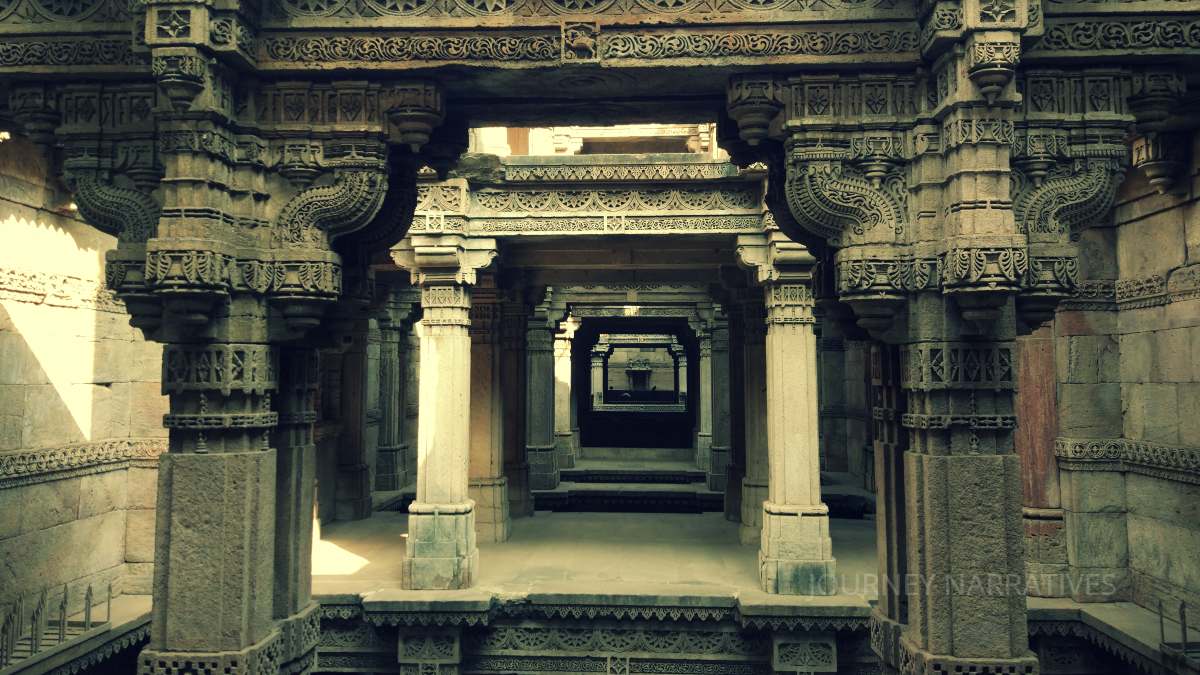
Adalaj Stepwell is not a monument you simply walk toward. It is a place you walk down into — slowly, deliberately, almost reverently.
Located near Ahmedabad in Gujarat, this 15th-century architectural masterpiece feels less like a structure and more like a story carved into stone. With every descending step, the temperature cools, the light softens, and the outside world fades.
This is not just sightseeing. This is immersion.
For a broader exploration of ancient marvels and culturally rich destinations, discover our Asia Travel Guide filled with stories and insights.
Table of Contents
1. The First Glimpse of Adalaj Stepwell Is Architectural Poetry
From ground level, Adalaj Stepwell appears modest.
But as you move closer, intricate carvings reveal themselves — floral motifs, mythological scenes, geometric precision. The sandstone glows warmly under Gujarat’s sun, but inside, shadows create a dramatic contrast.
The structure is also known as Adalaj ni Vav — “vav” meaning stepwell in Gujarati.
And it is far more than a water reservoir.
2. A Love Story Carved in Stone
The history of Adalaj Stepwell carries both beauty and tragedy.
It was commissioned in 1498 by Queen Rudabai (often referred to as Rani Roopba) in memory of her husband, Rana Veer Singh. Later completed under Sultan Mahmud Begada’s rule, the stepwell blends Hindu and Islamic architectural elements — a rare and symbolic fusion.
The monument becomes more powerful when you know its story. It is architecture layered with emotion.
3. Designed as a Climate Refuge
Adalaj Stepwell was not just ornamental — it was functional brilliance.
Built five stories deep, the structure was designed to:
- Harvest rainwater
- Store water year-round
- Provide a cool retreat from extreme heat
Even today, temperatures inside remain noticeably lower than outside — a reminder of the ingenuity of medieval Indian engineering.
4. The Pillars Tell Silent Stories
One of the most captivating aspects of Adalaj Stepwell is its carved pillars and platforms.
Every column feels intentional. Every detail feels deliberate.
You’ll notice:
- Intricate lattice work
- Symbolic carvings
- Balanced symmetry
Standing in the central shaft and looking upward, the layered balconies create a striking vertical frame — a photographer’s dream and a historian’s treasure.
5. A Rare Blend of Architectural Styles
Unlike many singular-style monuments, Adalaj Stepwell reflects a fusion of Hindu craftsmanship and Islamic design influence.
This synthesis mirrors Gujarat’s layered history — cultural transitions carved directly into stone.
It is not just beautiful; it is historically revealing.
6. A Quiet Escape Near Ahmedabad
Located about 18 km from Ahmedabad, Adalaj Stepwell makes for an easy half-day heritage excursion.
Despite its popularity, the underground design creates pockets of calm. Even when visitors are present, the space absorbs sound in a way that feels meditative.
It’s a pause from urban pace.
7. It Changes How You See Monuments
Many landmarks impress you from afar.
Adalaj Stepwell impresses you by drawing you inward.
You descend physically — and almost symbolically — into history. The play of light, shadow, stone, and silence creates an atmosphere that feels contemplative rather than overwhelming.
It’s not grand in scale like the Statue of Unity.
It’s intricate, intimate, and deeply atmospheric.
And that difference makes it unforgettable.
To uncover more hidden gems and timeless heritage sites across the country, journey through our India Travel Guide.
Travel Tips for Visiting Adalaj Stepwell
- Best Time to Visit: October to February
- Time Required: 1–2 hours
- Location: Near Ahmedabad, Gujarat
- Photography: Allowed
- Best Time of Day: Morning for softer light
Wear comfortable footwear, as steps can be uneven and narrow.

Is Adalaj Stepwell Worth Visiting?
Absolutely — especially if you appreciate architecture, storytelling, and historical depth.
Adalaj Stepwell is not loud. It doesn’t compete for scale. Instead, it captivates quietly — layer by layer.
Some monuments stand tall to impress you.
This one sinks deep to stay with you.
If places like this fascinate you, explore more architectural wonders and cultural spots through our detailed Ahmedabad Travel Guide.