Situated along the southern coastline of Kerala, Kovalam Beach represent one of the most distinctive natural shore systems along the Arabian Sea. Known for their crescent-shaped bays, rocky headlands, and naturally regulated wave patterns, these beaches illustrate how coastal geology and sea forces combine to shape refreshing tropical landscapes.
Rather than being a single continuous shoreline, Kovalam consists of interconnected beach segments, each formed by natural coastal features that influence sand movement, water behavior, and shoreline stability. Together, they create a coastal environment that is visually striking, ecologically balanced, and representative of Kerala’s western coast.
To discover more destinations across the state, explore our Kerala Travel Guide, featuring backwaters, hill stations, and scenic coastal escapes.
Kovalam Beaches form an important example of how India’s western coastline evolves naturally, a pattern also explored in detail in our broader guide to Coastal Landscapes across India.
Table of Contents
1. Crescent-Shaped Sandy Bays
One of the defining characteristics of Kovalam Beaches is their naturally curved, crescent-shaped shoreline. These formations occur due to the presence of rocky headlands that interrupt wave flow, allowing sand to settle evenly within sheltered bays.
Why this matters:
- Creates calmer near-shore waters
- Reduces aggressive wave erosion
- Enhances beach stability
This natural curvature gives Kovalam its iconic shoreline profile and contributes to safer coastal conditions during calmer seasons.
2. Rocky Headlands That Shape the Coast
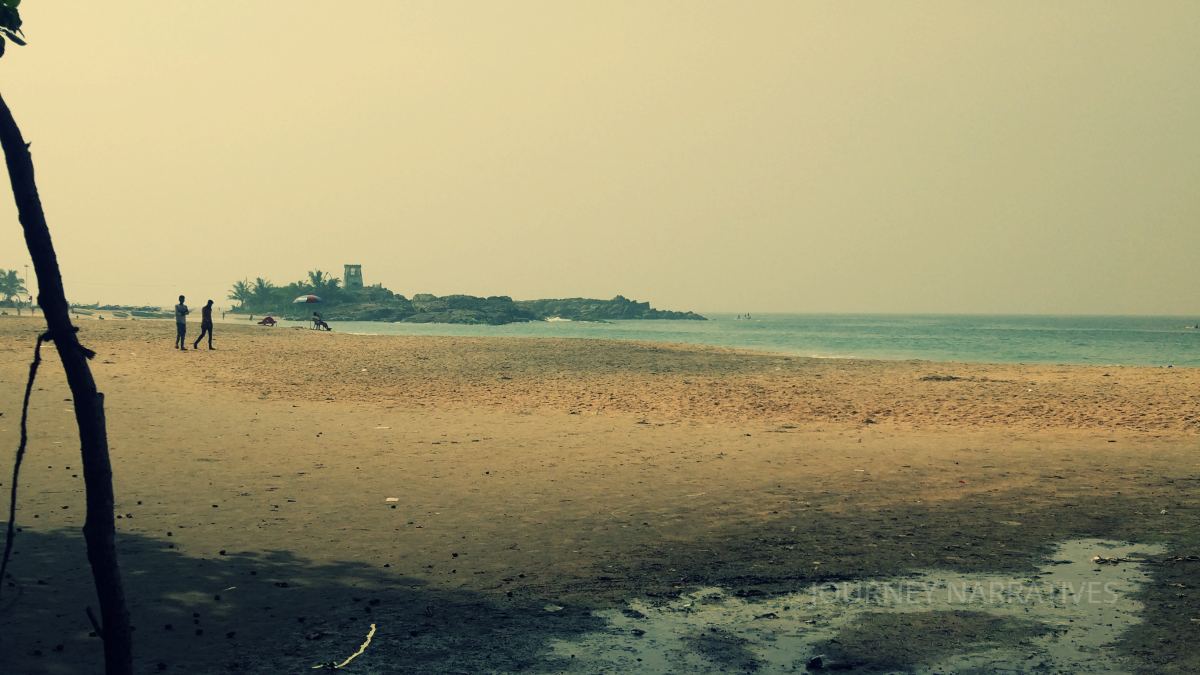
Kovalam’s beaches are separated by prominent rocky headlands that extend into the sea. These rock formations play a crucial role in controlling wave energy and defining individual beach sections.
Natural impact:
- Break incoming wave force
- Influence sand deposition patterns
- Create elevated coastal viewpoints
Over time, constant wave action has smoothed these rocks, forming organic shapes that blend naturally into the shoreline.
3. Lighthouse Beach’s Elevated Coastal Edge
Lighthouse Beach stands out due to its raised rocky cliff, topped by the historic lighthouse that overlooks the Arabian Sea. This elevated terrain offers a clear example of how coastal landforms create visual and structural diversity along the shore.
Key characteristics:
- Exposed sea-facing cliff edge
- Stronger wave patterns near rocks
- Wide coastal visibility
The lighthouse’s placement reflects how human structures often adapt to natural coastal elevations rather than altering them.
4. Naturally Sheltered Shores of Hawa Beach
Hawa Beach, located adjacent to Lighthouse Beach, benefits from partial natural shelter provided by surrounding rock formations. This results in gentler wave action and a wider sandy stretch.
Why it stands out:
- Softer wave intensity
- Gradual shoreline slope
- Open eastern sea views
The beach demonstrates how small variations in coastal structure can significantly affect shoreline behavior.
5. Calm and Undisturbed Nature of Samudra Beach
Samudra Beach lies slightly away from the more exposed sections of Kovalam, making it one of the calmest and least disturbed parts of the coastline. Natural rocky boundaries and vegetation help maintain its tranquil character.
Natural features:
- Minimal wave disruption
- Defined shoreline edges
- Reduced human impact
Samudra Beach highlights the importance of preserving quieter coastal zones to maintain ecological balance.
6. Seasonal Wave Patterns and Shoreline Renewal
Kovalam’s beaches undergo visible transformation with seasonal changes, particularly during the monsoon. Stronger waves reshape the shoreline, while post-monsoon periods restore smoother sands.
Seasonal dynamics:
- Monsoon-driven wave reshaping
- Natural sand redistribution
- Post-monsoon shoreline renewal
These cycles are essential for maintaining long-term coastal health and preventing permanent erosion.

Coastal Ecosystem and Environmental Balance
Kovalam’s shoreline supports a modest but important coastal ecosystem. Rocky zones provide shelter for small marine species, while sandy stretches support shoreline vegetation that stabilizes the coast.
Protecting water quality and limiting physical disturbance are essential for preserving this natural balance.
Best Time to Observe Kovalam’s Coastal Features
From a nature-focused perspective, the most suitable time to explore Kovalam Beaches is:
- October to March, when sea conditions are calmer
- Clear weather enhances coastal visibility
- Safer access to shoreline zones
Seasonal restrictions during rough sea conditions should always be followed.
Kovalam’s Role in Kerala’s Coastal Landscape
Kovalam Beaches exemplify how rock formations, sand movement, and wave behavior interact to create diverse coastal environments. The region serves as a valuable reference point for understanding Kerala’s western shoreline and its natural coastal processes.
If you’re planning a broader journey across the country, browse our India Travel Guide for diverse travel experiences.
A Defining Expression of Kerala’s Shoreline
Kovalam Beaches are more than a popular coastal destination—they are a living example of how natural forces shape and sustain tropical shorelines. Through curved bays, rocky headlands, and seasonal renewal, Kovalam defines the dynamic and refreshing character of Kerala’s coast.
As a supporting destination under broader coastal landscape studies, Kovalam remains an essential example of India’s naturally evolving shores.
For wider inspiration beyond India, explore our Asia Travel Guide and uncover unique coastal destinations across the continent.