

In Murudeshwar, sacred food rituals in Murudeshwar are not about indulgence or variety. They are about restraint, reverence, and remembrance — a quiet discipline practiced daily by devotees who believe that faith is strengthened not through abundance, but through simplicity.
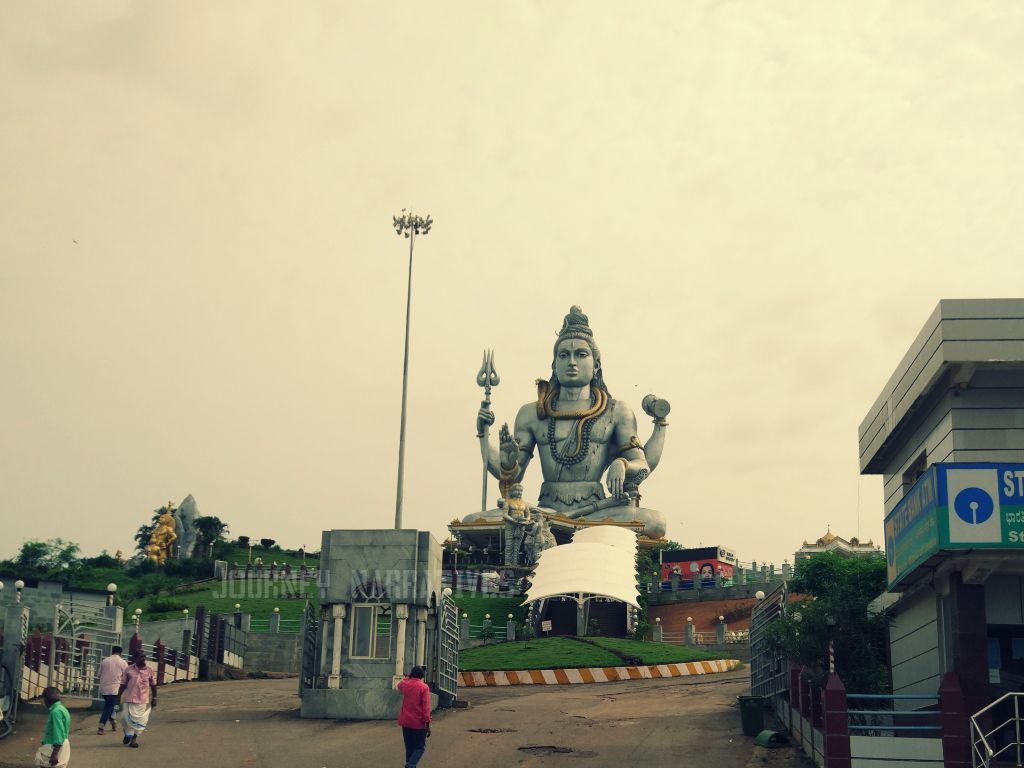
Set against the Arabian Sea and dominated by one of the world’s tallest Shiva statues, Murudeshwar attracts pilgrims seeking spiritual grounding. Yet beyond the towering icons lies a subtler tradition: sacred food rituals in Murudeshwar that shape how people eat, fast, share, and endure. These practices preserve culture even as they reveal the harsh realities of sacrifice woven into everyday life.
Table of Contents
1. Fasting as a Daily Spiritual Discipline, Not an Occasional Act
In Murudeshwar, fasting is not limited to festivals or special vows. For many devotees, especially those visiting the temple regularly, abstinence from food is a routine spiritual practice. Mondays, Pradosham days, and other Shiva-related observances often involve partial or complete fasting.
This ritual is rooted in the belief that a lighter body allows for a focused mind. Hunger here is not seen as deprivation, but as a conscious offering to faith. However, this discipline also reflects a deeper truth — for some, spiritual fasting and economic scarcity quietly overlap.
2. Temple Prasadam: Sacred Equality on a Simple Plate
Temple prasadam in Murudeshwar is modest — usually rice, a simple preparation, or a sweet offering. It is never extravagant. Yet its value lies not in flavor, but in symbolism.
Prasadam creates a rare moment of equality. Everyone receives the same portion, regardless of wealth or status. Pilgrims, workers, and locals sit side by side, sharing sacred food blessed by devotion.
At the same time, this ritual reveals a silent reality: for some devotees, prasadam is not symbolic nourishment but essential sustenance. Sacred food rituals often serve as an invisible support system in places where daily survival remains uncertain.
3. Simplicity as a Cultural Rule, Not a Constraint
Outside the temple, the food culture of Murudeshwar mirrors the same philosophy. Meals are repetitive, seasonal, and restrained. Rice, lentils, vegetables, and simple curries dominate local plates. There is little emphasis on indulgence.
This simplicity is not accidental. It reflects a cultural memory passed down through generations — a belief that food should sustain life, not dominate it. In sacred towns, culinary restraint becomes a form of cultural preservation, protecting traditions from excess and distraction.
Sacred food rituals in Murudeshwar offers a living example of the ideas explored in 4 Timeless Food Rituals and Eating Traditions in India That Preserve Culture — Even Amid Harsh Realities, showing how sacred food practices continue to sustain faith and identity even when daily life demands restraint and sacrifice.
4. Voluntary Hunger as an Expression of Devotion
One of the most striking aspects of Murudeshwar’s food culture is the willing acceptance of hunger. Devotees often choose to delay meals until darshan is complete or break fasts only after prayers.
This voluntary hunger contrasts sharply with modern food culture, where convenience and constant consumption define daily life. In Murudeshwar, sacrifice becomes meaningful because it is chosen — a reminder that devotion often demands comfort to be set aside.
Yet this also raises an uncomfortable truth: not all hunger here is voluntary. Sacred rituals and harsh realities coexist quietly, rarely discussed but deeply intertwined.

5. Community Kitchens and the Silent Economy of Faith
Though less visible than in larger pilgrimage centers, community-based food sharing exists in Murudeshwar — especially during festivals and peak pilgrimage seasons. These kitchens operate on donations, belief, and service rather than profit.
They sustain faith while filling gaps left by economic inequality. Food, in this context, becomes both a sacred offering and a social necessity, blurring the line between devotion and survival.
Why Sacred Food Rituals in Murudeshwar Endure Through Simplicity and Sacrifice
Sacred food rituals in Murudeshwar endure because they ask people to eat with intention rather than excess. In a place where faith shapes daily rhythm, simplicity becomes strength, and restraint becomes remembrance.
These rituals survive not because they are easy to follow, but because they offer meaning in exchange for comfort. By turning food into an act of devotion — through fasting, shared prasadam, and voluntary sacrifice — Murudeshwar preserves a cultural memory that continues to sustain belief even when material realities remain harsh.
