
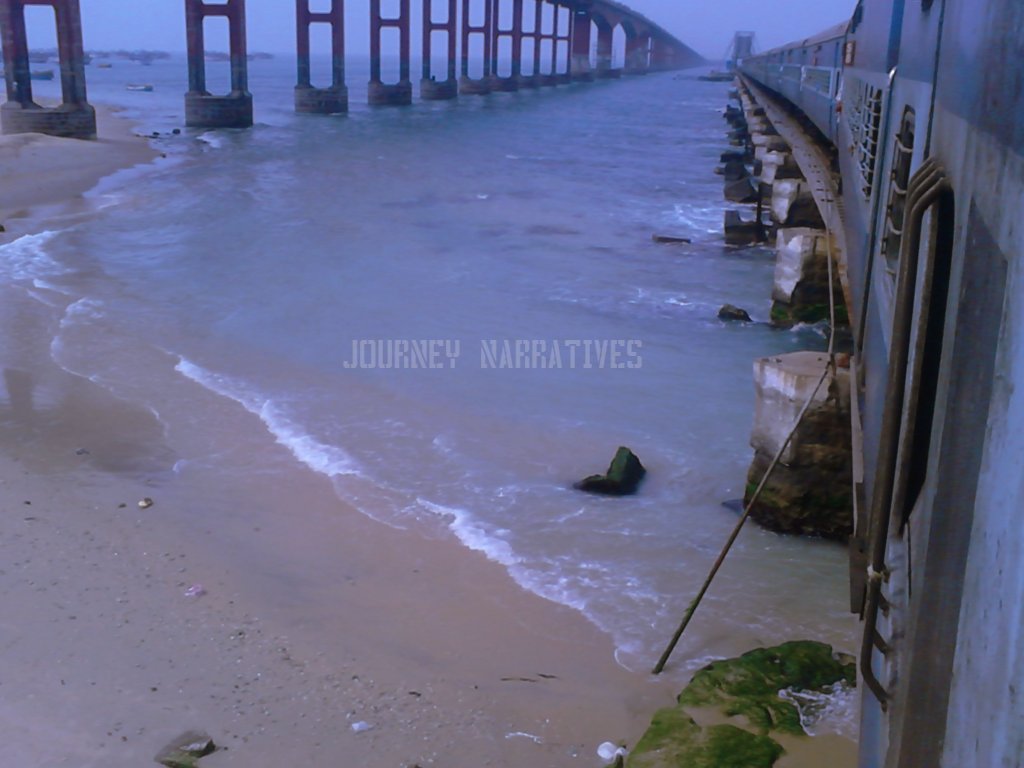
A journey based travel experience in India often reveals more than the destination itself—and crossing the Pamban Bridge is a powerful reminder of that truth. Stretching between the mainland and Rameswaram Island, this iconic passage transforms ordinary train and road travel into a deeply reflective journey.
Unlike fast-paced itineraries or checklist tourism, the Pamban crossing invites travelers to slow down, observe, and feel present. It is one of those travel moments that quietly imprints itself on memory, long after the journey ends.
Table of Contents
What Makes the Pamban Bridge a Journey-Based Travel Experience in India
The Pamban Bridge is not merely a connection between two places—it is a transition between states of mind. Surrounded by vast stretches of sea on both sides, the crossing creates a sense of suspension, where time seems to pause and awareness deepens.
As part of India’s most evocative journey-based travel experiences, the bridge reveals how movement itself can become meaningful when the journey is given space to unfold.
1. Watching the Sea Move Beneath You
Whether you cross by train or bus, the most striking moment is looking down at the sea flowing freely beneath the bridge. The water changes color with the sky, reflecting blues, greys, and silvers depending on the hour.
This moment teaches an important lesson about travel: not everything needs interpretation or explanation. Sometimes, the act of watching is enough. This quiet observation becomes a lasting memory—one that no photograph can fully capture.
This reflective moment connects beautifully with our blog post “7 Unforgettable Travel Experiences in India That Stir the Soul, Spark Joy, and Stay With You Forever,” where journeys like these show how travel becomes emotional rather than transactional.
2. Feeling the Rhythm of Train and Road Travel
Crossing the Pamban Bridge by train is a rhythmic experience—the gentle sway, the steady clatter, and the slow progress across open water. Road travel, on the other hand, offers a panoramic stillness where each second feels expanded.
Both modes reveal something essential about journey-based travel experiences in India: movement does not have to be rushed to be purposeful. When travel slows, awareness sharpens, and memory deepens.

3. Crossing as a Mental Transition, Not Just a Physical One
The final revealing moment comes without announcement—the realization that you are no longer the same person who began the crossing. The bridge acts as a psychological threshold, subtly shifting perspective.
By the time the journey ends, travelers often feel calmer, grounded, and more receptive. This is what separates ordinary transport from meaningful travel experiences—when the journey itself becomes part of personal growth.
Why Journey Based Travel Experience in India Stay With You Forever
Unlike destination-centric travel, journey-based travel experiences in India leave space for thought, silence, and emotional connection. The Pamban Bridge exemplifies this beautifully by offering nothing flashy—only presence, movement, and time.
These experiences do not demand attention; they invite it. And that is why they remain etched in memory long after the journey concludes.

A Journey That Becomes the Memory
Crossing the Pamban Bridge reminds us that travel is not always about arriving. Sometimes, it is about allowing the journey to shape how we feel, think, and remember.
As one of the most quietly powerful journey based travel experience in India, this crossing proves that the most unforgettable travel moments often happen between destinations—when we are simply moving, watching, and being present.
