
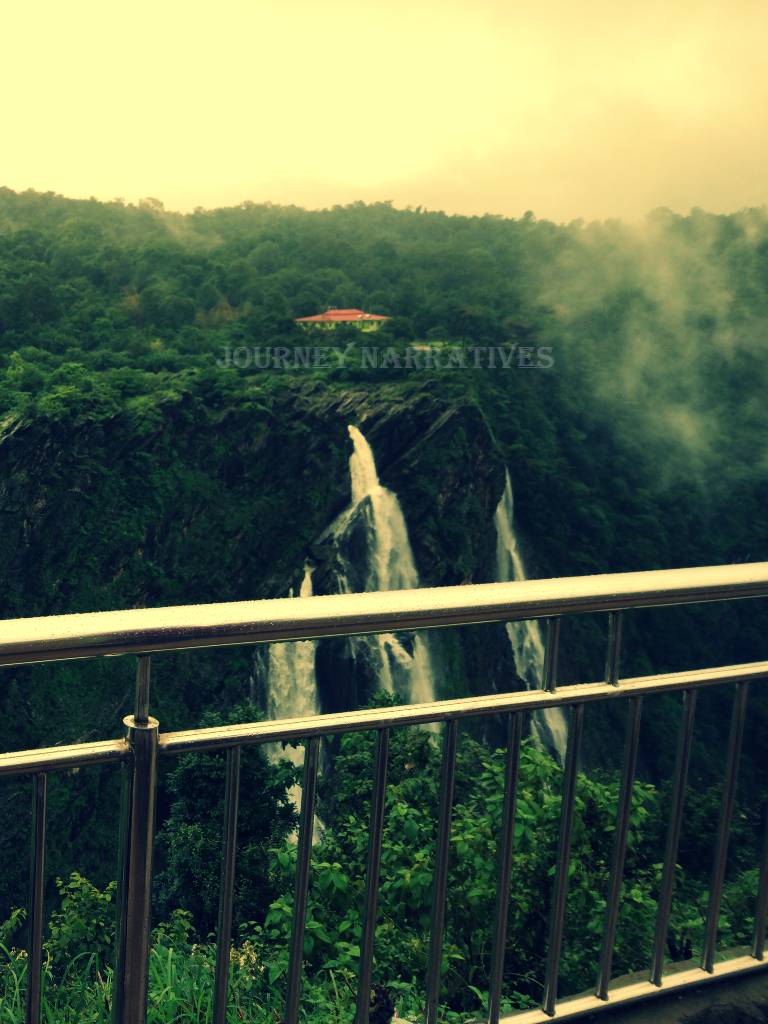
Tucked deep within the Western Ghats of Karnataka, Jog Falls in Shivamogga stands as one of India’s most powerful expressions of flowing water. Fed by the Sharavathi River, this dramatic waterfall system doesn’t descend as a single stream — instead, it splits into four mighty cascades, each carving the landscape in its own distinct way.
During the monsoon, Jog Falls transforms into a roaring spectacle, reminding visitors that rivers are not just scenic elements but forces capable of shaping forests, cliffs, and valleys over centuries.
Jog Falls is one of the most striking examples featured in our in-depth guide on Forest & River Landscapes: 6 Raw Natural Formations Carved by Water and Time, where rivers actively sculpt the land through movement and erosion.
Table of Contents
Understanding Jog Falls: A River in Free Fall
Unlike many tiered waterfalls, Jog Falls plunges vertically from a height of around 830 feet, making it one of the tallest waterfalls in India. What makes it exceptional is how the Sharavathi River breaks into multiple streams, creating six visually distinct drops and segments during peak flow.
This dynamic behavior places Jog Falls firmly within the theme of river-carved natural formations.
1. Raja Falls – The King of Cascades
Raja Falls is the most commanding of the drops. With a straight, uninterrupted plunge, it demonstrates the raw power of the Sharavathi River when volume is at its peak. The mist created at the base nourishes surrounding vegetation, contributing to the dense greenery that frames the gorge.
2. Rani Falls – Grace with Force
Flowing beside Raja Falls, Rani Falls appears slightly curved, softer in shape but no less powerful. During the monsoon, the two merge visually, creating a dramatic twin cascade that dominates the valley.
3. Roarer Falls – The Loudest Voice of the River
True to its name, Roarer Falls produces a thunderous sound as water crashes against protruding rocks before plunging downward. This interaction between rock and water highlights how erosion gradually reshapes cliff faces over time.
4. Rocket Falls – A Narrow Surge of Speed
Rocket Falls channels water through a tight opening, accelerating its descent. The speed and precision of this drop make it a striking example of how rivers adapt their flow based on terrain resistance.
5. Monsoon Overflow – When the Valley Awakens
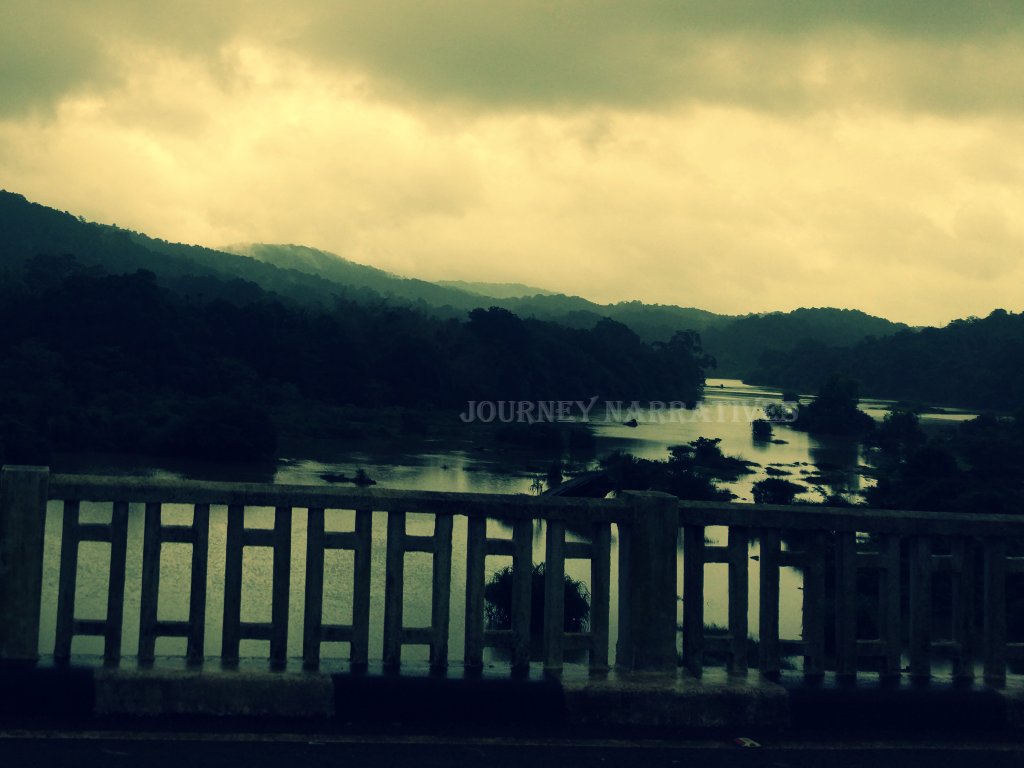
During heavy rains, smaller unnamed streams appear around the main falls. These temporary cascades emphasize how seasonal water volume dramatically alters the landscape, expanding the waterfall’s reach across the cliff face.
6. The Plunge Pool – Where Energy Settles
At the base of Jog Falls lies a deep plunge pool formed over centuries by falling water. This area collects sediments and nutrients, supporting aquatic life and sustaining downstream forest ecosystems.
The Role of Sharavathi River in Shaping the Region
The Sharavathi River doesn’t just create Jog Falls — it defines the entire ecosystem around Shivamogga. Its flow supports evergreen forests, influences local climate, and feeds into hydroelectric projects further downstream, showing how natural force and human dependency intersect.
Jog Falls is a reminder that rivers are active sculptors, not passive scenery.

Best Time to Experience Jog Falls
- Monsoon (July–September): Most dramatic, full force of water
- Post-monsoon (October–November): Clear views with moderate flow
- Summer: Reduced flow, better for viewing the rock formations
Swimming near the base is not permitted due to strong currents.
Why Jog Falls Belongs in Forest & River Landscapes
Jog Falls perfectly embodies the theme of natural formations carved by water and time. It is not just about height or volume, but about:
- River dynamics
- Rock erosion
- Forest nourishment
- Seasonal transformation
Echoes of a Falling River
Jog Falls in Shivamogga is not defined solely by its height or volume, but by the way the Sharavathi River releases its energy into the landscape. Each drop, whether roaring or subtle, leaves behind mist, carved rock faces, and nourished forest floors. Over time, this constant movement transforms stone into story, reminding us that rivers shape the land not through force alone, but through persistence.
Long after the sound of falling water fades, the presence of Jog Falls continues to resonate. It lives in the deep gorge below, in the surrounding forests sustained by river spray, and in the rhythm of seasons that alter its form. These echoes reveal a simple truth — flowing water is one of nature’s most enduring storytellers, shaping landscapes that feel both powerful and timeless.
