
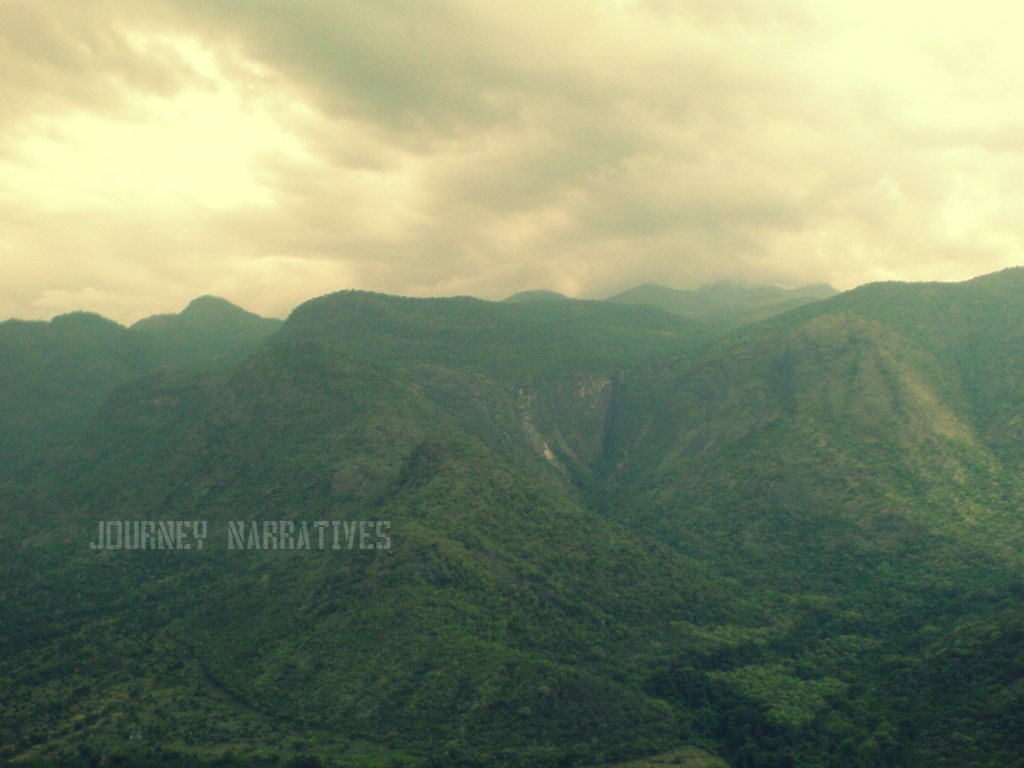
The Kodaikanal hills, perched high on the Palani range, carry a different kind of intensity. Their landscapes don’t overwhelm; they steady you. Here, altitude works quietly — cooling the air, stretching the horizon, and slowing thought. The Kodaikanal hills reveal power through calm, offering views that feel less like spectacles and more like moments of alignment between land and listener.
Table of Contents
1. Coaker’s Walk: A Horizon Meant for Stillness
Tracing the edge of steep valleys, Coaker’s Walk offers wide, layered views that change noticeably with shifting light and passing mist. In the early hours, low clouds often drift across the viewpoint, softening the divide between sky and hillside and briefly limiting visibility before clearing again. The narrow, well-defined path encourages visitors to slow down, making the walk less about distance and more about observing the scale and depth of the landscape spread out below.
2. Dolphin’s Nose: The Edge That Teaches Perspective
Jutting sharply into open air, Dolphin’s Nose delivers one of Kodaikanal’s most commanding and expansive viewpoints. From the edge, the land drops away into deep valleys, clearly revealing the scale and layered structure of the surrounding Palani Hills. Forested slopes, winding contours, and distant ridgelines come into view, offering a strong sense of elevation without visual clutter. Despite its height and open exposure, the viewpoint encourages stillness rather than urgency, reinforcing how physical distance and uninterrupted space can naturally quiet the mind.
3. Pillar Rocks: Strength Framed by Silence
Rising prominently against the shifting sky, the Pillar Rocks form one of Kodaikanal’s most recognizable natural landmarks. These tall, vertical rock formations stand separated yet aligned, creating a strong visual contrast with the surrounding slopes and forests. Fog frequently gathers around their lower sections, partially obscuring their bases and adding depth to the view without overwhelming it. From nearby viewpoints, the landscape feels structured and balanced rather than dramatic, with the Pillar Rocks conveying a quiet sense of strength shaped by time, weather, and elevation.
4. Green Valley View: Depth Without Distraction
Formerly known as Suicide Point, Green Valley View offers one of Kodaikanal’s deepest and most expansive perspectives. The viewpoint looks out over a vast drop framed by dense forests, rolling slopes, and frequent layers of mist that soften the sense of height. Rather than feeling overwhelming, the depth of the valley feels measured and composed, with natural elements providing visual balance. The open outlook encourages visitors to pause and take in the scale gradually, allowing the landscape to be experienced without urgency or distraction.
5. Berijam Lake Trails: Where Altitude Meets Solitude
Beyond the lake itself, the surrounding trails rise gradually into quieter and less frequented elevations. As the paths move away from open viewpoints, forest canopies close in, allowing filtered light and shifting shadows to define the experience. Occasional clearings reveal distant hill silhouettes, offering subtle high-altitude perspectives without the sense of exposure found at cliff-edge viewpoints. These trails support a slower, more inward-focused experience, where elevation is felt through atmosphere rather than dramatic views.
6. Sunset Viewpoints Along Upper Palani Roads: Gentle Closures
Away from the more crowded lookouts, several lesser-known roadside viewpoints offer open views of sunsets unfolding gradually across layered hills. As daylight recedes, colors shift slowly from warm tones to muted shades, allowing the landscape to change without dramatic contrast. The absence of crowds and elevated platforms keeps the experience grounded, aligning with Kodaikanal’s unhurried rhythm. These moments are not designed to impress instantly, but to reward those willing to pause and observe the transition in light and form.
Kodaikanal’s calming high-altitude views form part of a wider pattern where elevation shapes emotion — a recurring theme explored across diverse mountain and hill landscapes in our broader highland journey.

What the Kodaikanal Hills Leave Behind
The Kodaikanal Hills leave behind a deep sense of quiet strength. Their views don’t shout; they steady. Long after leaving, what returns is not the height itself but the feeling of mental space — carved by mist, altitude, and horizons that seem to breathe.
More than destinations, these high-altitude views become emotional markers. They remind us that power in nature doesn’t always arrive as drama or danger; sometimes it arrives as calm that stays with us, subtly reshaping how we carry ourselves back into the world.
