
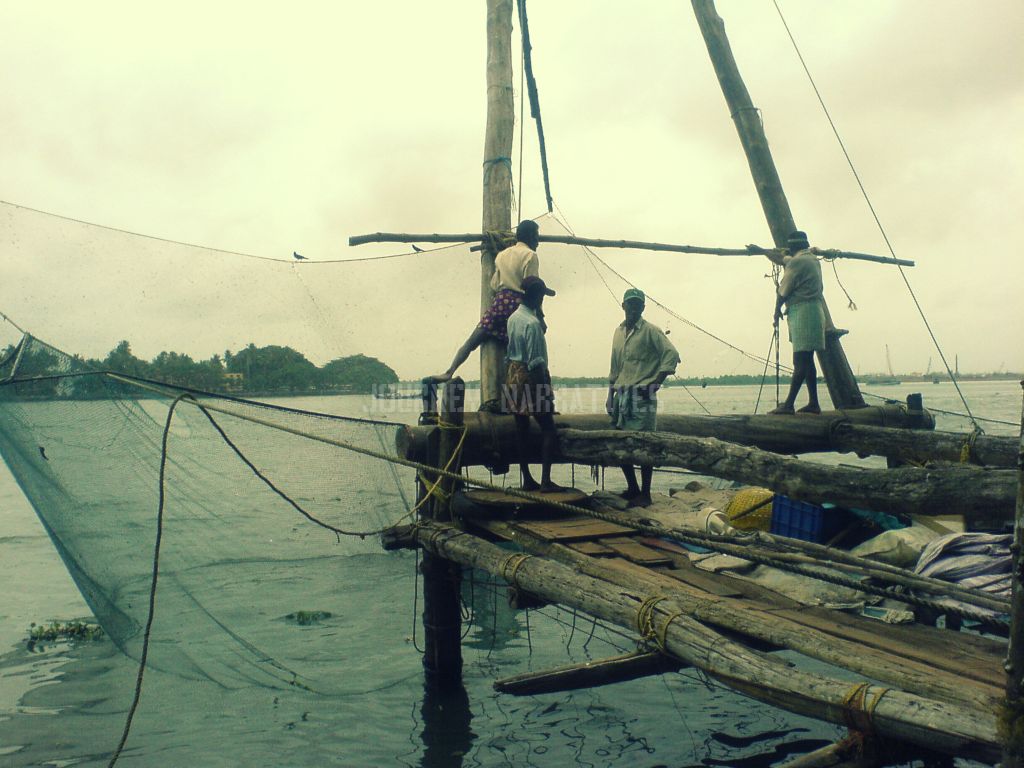
Eating Practices at Kochi Chinese Fishing Nets are shaped by tides, timing, and necessity rather than trends or indulgence. Along this historic stretch of Kerala’s coast, food is not planned around recipes but around what the sea allows each day. For fishing families living beside the nets, eating is an act of adaptation — simple, seasonal, and deeply tied to survival, memory, and shared labor. These daily food habits quietly reveal how tradition continues even when comfort is limited.
Table of Contents
1. Morning Meals Timed to the Tide, Not the Clock
In homes near the Chinese fishing nets, breakfast is dictated by the sea. Fishermen return at dawn, and meals are eaten quickly — usually kanji (rice porridge), leftover rice, or simple tapioca — before rest or repair work begins.
This rhythm shows how food here supports energy and recovery rather than pleasure, aligning daily nourishment with natural forces.
2. Fresh Catch as the Center of Everyday Cooking
Unlike markets where choice is abundant, households near the nets cook only what arrives in the nets that morning. Small fish, prawns, or sardines are lightly spiced and cooked the same day, often shared with neighbors if the catch is generous.
These everyday eating practices near Kochi’s Chinese fishing nets reflect a culture where waste is avoided and gratitude is practiced quietly, without ceremony.
3. Simple Cooking Methods Passed Down Through Generations
Most meals rely on techniques that require minimal fuel and ingredients — shallow frying, boiling, or quick curries with coconut and salt. Recipes are rarely written; they are learned by watching, tasting, and adjusting.
4. Shared Meals That Strengthen Family Bonds
Eating together remains central to life near the fishing nets. Meals are often eaten from a common vessel, reinforcing unity after long, physically demanding hours. Even when food is scarce, it is divided equally — elders first, children next.
These shared meals reveal how everyday food sustains not just bodies, but relationships and mutual responsibility.
5. Food as a Tool for Endurance, Not Indulgence
Spices are used sparingly, oil is limited, and portions are modest. This is not restraint by choice, but by experience. Families cook in ways that keep them strong enough to return to work the next day.
Such practices reflect the same truth seen across India’s food culture — that eating traditions often develop as responses to hardship, a theme central to your pillar post on timeless food rituals across the country.

Why Eating Practices at Kochi Chinese Fishing Nets Still Matter
The everyday eating practices near Kochi’s Chinese fishing nets show how food traditions survive without abundance. These meals may never appear in cookbooks or festivals, yet they carry the essence of Indian food culture — resilience, balance, and respect for nature.
When Everyday Meals Carry Generations Forward
The eating practices around Kochi’s Chinese fishing nets reveal how food, work, and community life remain closely connected along this historic coastline. From early morning catches and market exchanges to family kitchens and small food stalls, daily meals reflect a rhythm shaped by the sea and sustained by generations of local knowledge. These traditions are not preserved in museums or written records alone—they live on through the ordinary acts of buying, cooking, and sharing food.
Each dish prepared in this landscape carries traces of the past: fishing techniques passed down through families, spice combinations refined over time, and cooking habits shaped by both necessity and creativity. The nearby markets, modest eateries, and waterfront homes together create a living food system where nourishment, livelihood, and culture are deeply intertwined.
In the end, the everyday meals near Kochi’s Chinese fishing nets remind us that food traditions endure not because they are formally protected, but because they are practiced daily. Through simple routines of preparation and sharing, families and communities continue to carry their culinary heritage forward—ensuring that the flavors of the past remain part of the present and the future.
Kochi is just one of many destinations where cuisine reflects everyday traditions—discover more in 12 Indian Cities That Reveal the Best of Food and Local Life in India.
