Shravanabelagola Sacred Landmarks represent one of the most revered pilgrimage traditions in Jainism. Located in Karnataka’s Hassan district, this ancient town has served as a spiritual center for over a thousand years.
Famous for its towering monolithic statue of Bahubali and hilltop Jain temples carved in stone, Shravanabelagola embodies the Jain principles of non-violence, renunciation, and liberation. Unlike bustling temple cities, its atmosphere is quiet, meditative, and deeply introspective.
For devotees and heritage travelers alike, Shravanabelagola offers not grandeur — but spiritual gravity.
Table of Contents
1. Gommateshwara statue – The Monument of Absolute Renunciation
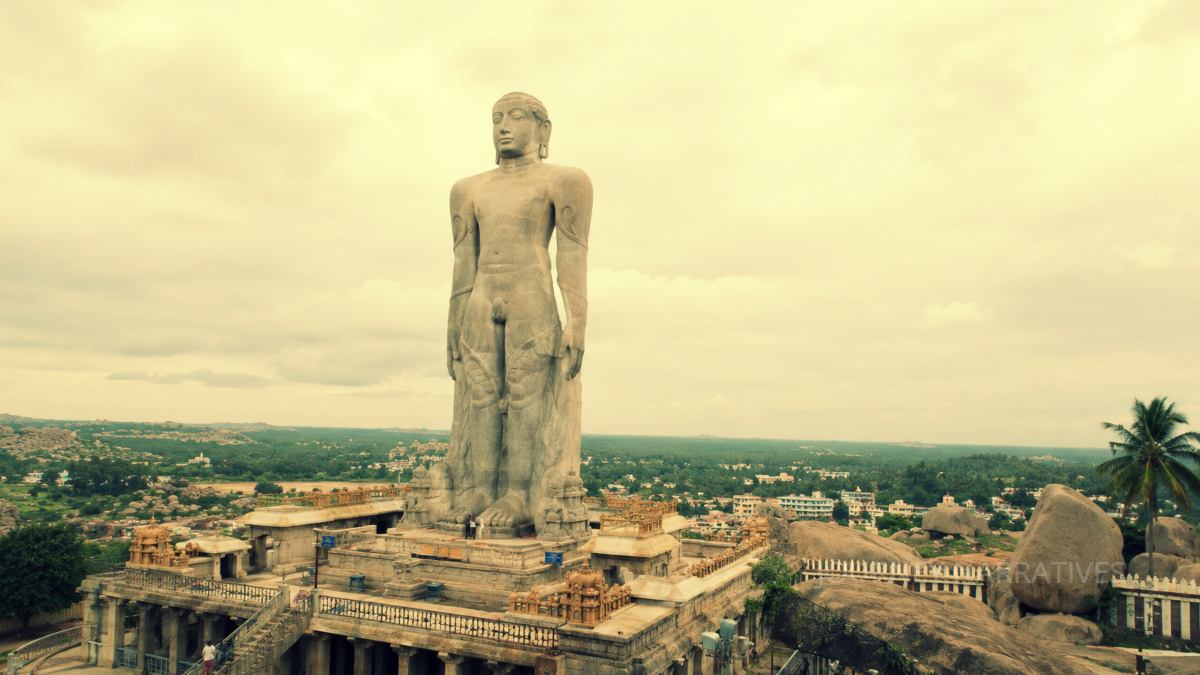
Standing 57 feet tall atop Vindhyagiri Hill, the statue of Bahubali (also known as Gommateshwara) is among the tallest free-standing monolithic statues in the world.
Carved in 981 CE during the reign of the Western Ganga dynasty, the statue depicts Bahubali in deep meditation, vines wrapping around his legs — symbolizing his complete detachment from worldly distractions.
It is not merely a sculpture; it is a philosophical statement carved in stone.
2. Vindhyagiri Hill – The Sacred Ascent
Pilgrims climb over 600 granite steps barefoot to reach the summit of Vindhyagiri Hill.
This physical ascent mirrors the spiritual climb toward moksha (liberation). The panoramic views from the top reinforce the sense of elevation — both literal and spiritual.
3. Chandragiri Hill – The Hill of Ancient Basadis
Facing Vindhyagiri is Chandragiri Hill, home to several ancient Jain basadis (temples).
Dating back to the 9th and 10th centuries, these temples preserve inscriptions, sculptures, and memorials of Jain monks and rulers who renounced royal life for spiritual pursuit.
4. Mahamastakabhisheka – The Grand Anointing Ceremony
Held once every 12 years, Mahamastakabhisheka is a spectacular ritual where the Bahubali statue is ceremonially bathed with milk, saffron, sandalwood paste, turmeric, and flower petals.
This rare event draws thousands of Jain devotees from India and abroad, reaffirming Shravanabelagola’s global spiritual importance.
5. Tyagada Kamba – The Pillar of Sacrifice
This historic pillar symbolizes acts of renunciation and self-discipline central to Jain philosophy.
It stands as a quiet but powerful reminder of spiritual surrender.

6. Akkana Basadi – Architectural Elegance
Built in the 12th century, Akkana Basadi is known for its refined stone carvings and symmetrical design.
Its simplicity reflects the Jain aesthetic — understated yet deeply meaningful.
7. Odegal Basadi – The Triple Shrine
Odegal Basadi houses three sanctums dedicated to Jain Tirthankaras.
Its massive stone slabs and fortified structure demonstrate early Dravidian architectural influences.
8. Kalyani Tank – The Sacred Water Reservoir
The town derives its name from this large white pond (Belagola means “white pond” in Kannada).
This serene water body adds balance to the granite landscape and enhances the town’s contemplative atmosphere.
9. Jain Inscriptions and Epigraphs – A Recorded Spiritual History
Shravanabelagola contains some of the earliest Kannada and Sanskrit inscriptions in India.
These records document royal patronage, monastic lineages, and historical accounts of spiritual renunciation.
10. The Living Jain Community – Tradition Beyond Stone
Beyond monuments, Shravanabelagola remains a living pilgrimage center.
Daily rituals, community gatherings, and monastic traditions continue to sustain its spiritual rhythm, ensuring that the town is not just preserved history — but active heritage.
Why Shravanabelagola Sacred Landmarks Matter in India’s Religious Landscape
Shravanabelagola represents the core of Jain philosophy — ahimsa (non-violence), aparigraha (non-attachment), and self-discipline.
In a country known for grand temple architecture and elaborate rituals, Shravanabelagola stands apart through silence and restraint.
It contributes a vital Jain dimension to India’s sacred geography.
Best Time to Visit
- October to March – Comfortable weather
- Mahamastakabhisheka year – For a rare, once-in-12-years spectacle
How to Reach
- Nearest major city: Bengaluru
- Well connected by road from Hassan and Mysuru
- Nearest railway station: Shravanabelagola
Shravanabelagola is one of the most significant Jain pilgrimage cities featured in our guide to 11 Sacred Holy Cities in India That Define the Country’s Spiritual Soul.
Shravanabelagola in Today’s Spiritual Journey
The Shravanabelagola Sacred Landmarks continue to inspire both pilgrims and heritage travelers seeking depth beyond ornamentation.
Here, devotion is expressed not through grandeur but through discipline, silence, and ascent. It remains one of India’s most meaningful Jain pilgrimage destinations — quietly powerful and spiritually enduring.